Thank you very much for your interest in our laboratory. Here, we would like to briefly introduce our activities and policies. We hope this will help you in choosing your academic path and selecting a research group.
Let us begin by broadly categorizing experimental research laboratories in the field of materials science into three types:
Creating substances or materials (synthesis, fabrication)
Processing substances or materials (processing)
Measuring substances or materials (measurement, analysis, characterization)
Our laboratory focuses primarily on category 3).
Of course, actual research almost always involves all three elements. For example, if one were to create the world’s hardest alloy, it would also be necessary to consider methods for processing it. Furthermore, unless reliable techniques are established to evaluate how hard the material truly is, or how well it can be processed, the alloy could never be put into practical use.
In other words, no matter how revolutionary a new material is, it cannot demonstrate its value unless its properties are properly evaluated and it can be processed for its intended applications. Conversely, even the most advanced measurement technique cannot be used in practice without methods to prepare samples suitable for that technique. The same applies to the field of materials processing.
Understanding that these three components cannot be completely separated, we would like to explain why this research group has chosen to focus specifically on measurement and characterization.
What “Measurement” Means in Our Laboratory
First, it’s easy to picture what it means to create substances or materials. You might imagine someone in a lab coat mixing things in a test tube—that sort of scene. Material processing is also not too difficult to imagine: cutting, hammering, bending, bonding… simple images probably come to mind right away. So then, what kind of image do you have of measurement? In reality, I suspect most of you have not consciously thought about “measurement” in your classes up through high school. Maybe you measured the volume of water in chemistry class, or weighed reagents in home economics or technology class. But can such things really develop into research at the university level?
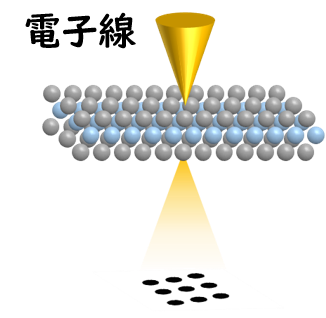
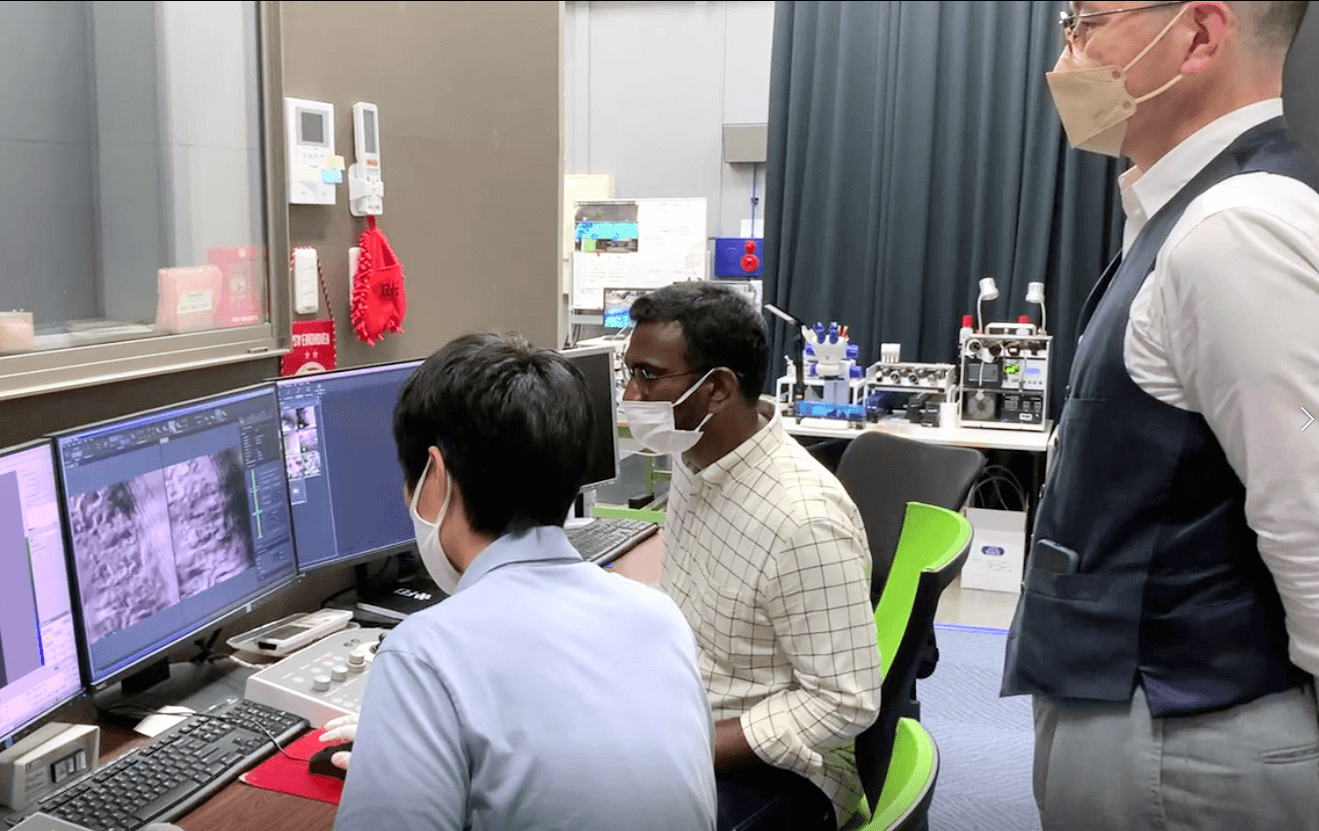
In our laboratory, we mainly use electron beams as probes to measure the nature and condition of samples. In other words, our broad research goal is: “to directly observe the three-dimensional arrangement of atoms and structures that make up a sample, using a probe as small as the atoms themselves, and to understand the properties that arise from that arrangement.”
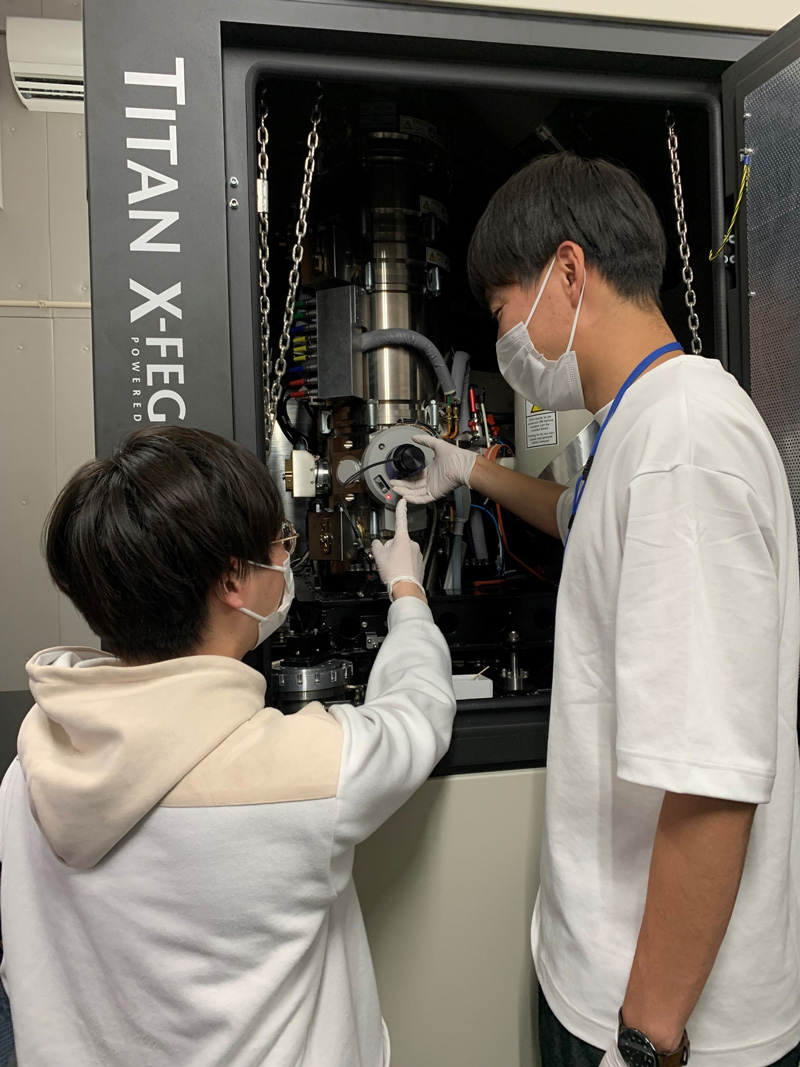
The advanced instruments used for such measurements (or observations) are called electron microscopes. As shown below, electron microscopes have been indispensable tools in natural science and R&D, with multiple achievements recognized by Nobel Prizes in the three major natural science fields.
1986 – Design of the transmission electron microscope and the scanning tunneling microscope
2014 – Development of super-resolution fluorescence microscopy, which dramatically improved the performance of optical microscopes
2017 – Development of cryo-electron microscopy, enabling high-resolution observation of biomolecules in solution
Thus, even nearly 90 years after their invention in 1931, electron microscopes continue to evolve, achieving Nobel Prize-level advancements. Furthermore, they attract attention as a research area that integrates cutting-edge methods such as machine learning and deep learning using Python, advanced data processing and analysis, and sophisticated mathematical algorithms like sparse modeling.
This means that students who enjoy hands-on experimental work and students who want to try programming or image processing on a computer both have a place to shine. In electron microscopy, either path can be the star.
Our Vision and Objectives
In our research group, we place great importance on the close interplay between experimental work and technological development. On the experimental side, we work with a wide range of materials—from the three major classes of industrial materials (metals, polymers, and ceramics) to semiconductors, nanostructured materials, and even natural substances such as minerals and meteorites. On the technology-development side, we pursue methods that directly compete with leading groups in Europe and the United States, such as combining three-dimensional imaging with dynamic observations in which we change the sample temperature inside the electron microscope or apply external forces or laser stimulation. These approaches not only allow us to directly observe phenomena at the atomic scale that were previously unobservable, but also—when integrated with simulations—offer the potential to uncover and predict new physics. Our laboratory is actively exploring these possibilities.
Although this is a brief overview, among the many advanced measurement techniques available today, electron microscopy stands out in its exceptional versatility. From research in universities and national laboratories to R&D in industry, and across fields ranging from nanotechnology to biomedical science, it is difficult to find an area where electron microscopes are not used. Learning the fundamentals of such a powerful and widely applicable analytical technique is something that will undoubtedly serve you well in the future.
Our laboratory also supports students applying for JSPS fellowships and scholarship programs, and we can provide financial support through RA positions when possible. If you are interested, please feel free to contact us.
Alma maters of students and research fellows
Kurume National College of Technology, Fukuoka University, Miyazaki University, Kyoto University, Chiang Mai University
Fields of origin for students and academic researchers
TOPPAN Holdings Co., Ltd., Mitsubishi Heavy Industries, Ltd.
Those interested in joining the lab should contact us.
Please fill out the form at the bottom of the page.
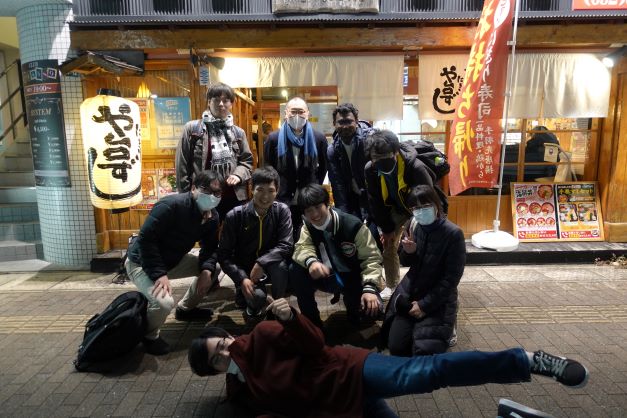
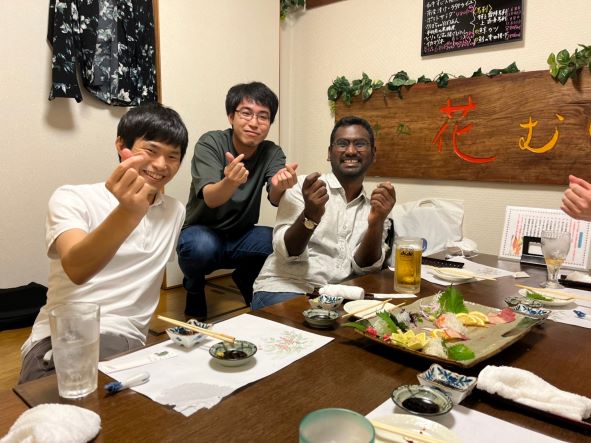
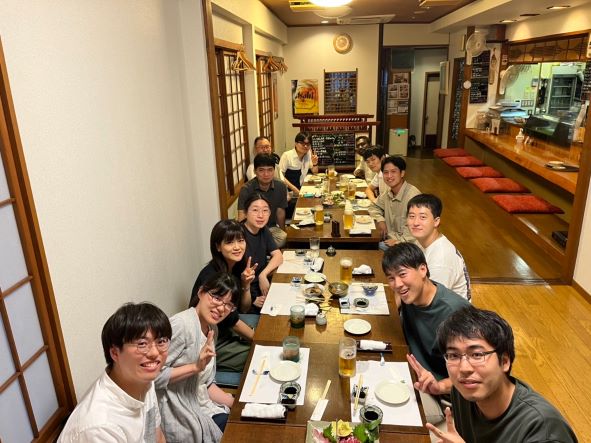
Photo Gallery
Practical Training Highlights
The Science of Molecules
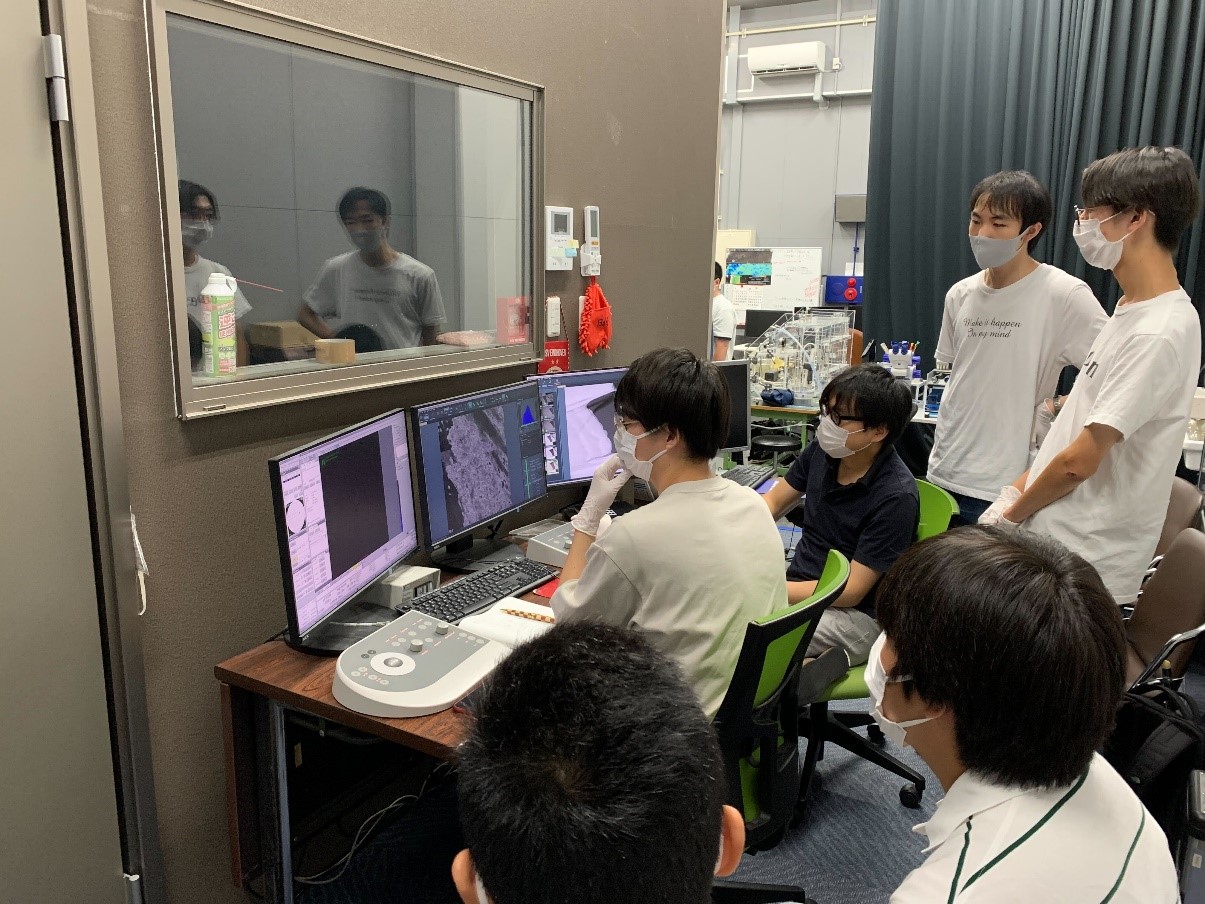
August 31 to September 2, 2022 (3 days): We conducted exercises in molecular science and performed tensile tests on polypropylene inside a transmission electron microscope. On the final day, participants created a spectral analysis program. Although none of the participants had prior programming experience, they successfully completed the program by the end.
Participating students’ departments: Faculty of Art and Design, Faculty of Economics, Faculty of Science, Faculty of Engineering
part-time job
The Murayama Laboratory is recruiting part-time workers.
Job Opening Details
Support for electron microscope experiments
Contact
For lab placement requests or other inquiries, please contact us here.